

Introduction
Artificial Intelligence (AI) is transforming the way people design and decorate their homes. From creating realistic room layouts to selecting furniture, colors, lighting, and décor, AI home design tools make it easier than ever to visualize your dream home before making any expensive changes.
Whether you’re renovating a single room, designing a new house, or simply looking for fresh interior ideas, AI-powered home design platforms can generate professional-quality concepts in just a few minutes. These tools analyze room dimensions, design preferences, color palettes, and furniture styles to create personalized layouts that match your taste and budget.
In this comprehensive guide, you’ll learn how AI home design works, its benefits, the best AI tools available in 2026, and how to use artificial intelligence to create stylish, functional, and modern living spaces.
Table of Contents
What Is AI Home Design?
AI home design refers to the use of artificial intelligence to assist in planning, decorating, renovating, and visualizing residential spaces. Instead of hiring an interior designer for every idea, homeowners can upload photos or floor plans into AI software and instantly receive customized design suggestions.
These systems use machine learning, computer vision, and generative AI to understand the structure of a room and recommend improvements based on user preferences.
For example, AI can suggest:
- Better furniture placement
- Modern color combinations
- Flooring options
- Wall décor ideas
- Lighting improvements
- Space-saving layouts
- Kitchen remodeling concepts
- Bathroom redesigns
Many AI design platforms can even create photorealistic 3D renderings, allowing homeowners to see how their rooms will look before purchasing furniture or starting renovations.
How AI Home Design Works
Most AI home design tools follow a simple process:
Step 1: Upload Your Room
Users upload a photograph or floor plan of their room.
Step 2: Choose a Design Style
Popular styles include:
- Modern
- Minimalist
- Scandinavian
- Luxury
- Industrial
- Traditional
- Farmhouse
- Contemporary
- Bohemian
- Japanese Zen
Step 3: AI Analyzes the Space
The software identifies:
- Walls
- Windows
- Doors
- Furniture
- Lighting
- Room dimensions
Step 4: Generate New Designs
Within seconds, AI creates multiple design concepts.
Step 5: Customize Everything
Users can modify:
- Paint colors
- Furniture
- Flooring
- Curtains
- Lighting
- Decorations
- Cabinets
- Appliances
Benefits of AI Home Design
AI-powered home design offers several advantages over traditional planning methods.
Saves Time
Instead of spending weeks working with designers, AI can generate room concepts in minutes.
Reduces Costs
Many homeowners use AI to experiment with layouts before hiring professionals, helping avoid costly mistakes.
Unlimited Design Ideas
AI can instantly generate multiple room styles, giving homeowners more creative inspiration.
Easy for Beginners
No interior design experience is required.
Better Visualization
Photorealistic images help users understand how finished spaces will look.
Personalized Recommendations
AI learns your preferences and suggests matching furniture, colors, and décor.
AI Home Design vs Traditional Interior Design
| AI Home Design | Traditional Design |
|---|---|
| Fast results | Longer planning process |
| Lower cost | More expensive |
| Multiple concepts instantly | Limited revisions |
| Available 24/7 | Appointment required |
| Easy for beginners | Professional expertise needed |
| Excellent for planning | Best for full execution |
Best AI Home Design Tools (2026)
1. Planner 5D
Planner 5D allows users to create detailed 2D and 3D home layouts with AI-powered design assistance.
Features:
- Floor planning
- Furniture placement
- Room visualization
- Interior design suggestions
- Virtual walkthroughs
2. RoomGPT
RoomGPT lets users upload room photos and instantly redesign them using artificial intelligence.
Popular styles include:
- Modern
- Minimalist
- Luxury
- Scandinavian
- Coastal
3. Homestyler
Homestyler combines AI with professional interior design tools.
It offers:
- 3D rendering
- Furniture libraries
- Real product integration
- AI decoration ideas
4. Interior AI
Interior AI focuses on transforming existing room photos into beautifully redesigned spaces using advanced AI image generation.
It is especially useful for homeowners planning renovations.
5. DecorMatters
DecorMatters uses augmented reality and AI to help users visualize furniture and decorations inside real rooms.
Popular AI Design Styles
Modern
Minimalist
Luxury
Scandinavian
Industrial
Japandi
Bohemian
Farmhouse
Classic
Contemporary
AI Home Design for Every Room
Artificial intelligence can redesign almost every area of a house.
Popular projects include:
- Living Room
- Bedroom
- Kitchen
- Bathroom
- Dining Room
- Office
- Balcony
- Garden
- Kids’ Room
- Home Theater
Living Room Design with AI
AI helps create comfortable and visually appealing living rooms by recommending:
- Sofa placement
- TV wall design
- Lighting
- Rugs
- Wall art
- Storage ideas
- Color themes
Bedroom Design Using AI
AI bedroom planning includes:
- Bed positioning
- Wardrobe design
- Mood lighting
- Color psychology
- Space optimization
- Decorative accessories
AI Kitchen Design
Artificial intelligence is revolutionizing kitchen planning by helping homeowners create functional, stylish, and efficient cooking spaces. AI tools can analyze the size of your kitchen, identify existing cabinets and appliances, and generate layouts that maximize storage and workflow.
AI kitchen design features include:
- Smart cabinet placement
- Countertop material suggestions
- Kitchen island ideas
- Storage optimization
- Appliance positioning
- Modern lighting recommendations
- Color palette generation
- 3D kitchen visualization
Many AI platforms also estimate renovation costs, making budgeting easier before construction begins.
AI Bathroom Design
Bathrooms are often limited in space, making proper planning essential. AI helps create layouts that improve both comfort and functionality.
Popular AI bathroom recommendations include:
- Walk-in shower designs
- Modern vanity placement
- Mirror positioning
- Smart lighting
- Luxury tile combinations
- Space-saving storage
- Waterproof material suggestions
AI-generated bathroom concepts help homeowners compare multiple renovation styles before selecting a final design.
AI Floor Plan Design
One of the biggest advantages of AI home design is automatic floor planning.
Instead of drawing layouts manually, AI can generate optimized floor plans based on:
- Plot size
- Number of bedrooms
- Family size
- Budget
- Natural lighting
- Ventilation
- Parking requirements
- Outdoor space
This helps architects and homeowners save significant planning time.
AI Exterior Home Design
Artificial intelligence isn’t limited to interiors—it also enhances exterior design by suggesting:
- House façade styles
- Roof designs
- Window placement
- Exterior paint colors
- Garden landscaping
- Driveway layouts
- Outdoor lighting
- Fence and gate designs
Photorealistic AI renderings make it easy to visualize curb appeal before starting construction.
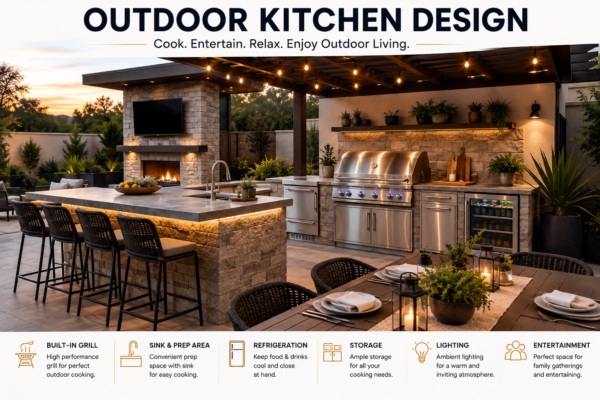
AI Landscape and Garden Design
Modern AI tools can transform outdoor spaces into beautiful, functional landscapes.
They can recommend:
- Flower arrangements
- Tree placement
- Walking paths
- Patio layouts
- Water features
- Outdoor seating
- Lawn optimization
- Lighting for gardens
AI also considers sunlight exposure and local climate to provide practical landscaping suggestions.
Smart Home Integration with AI
Today’s AI home design platforms often integrate with smart home technologies.
Examples include:
- Smart lighting systems
- Voice-controlled assistants
- Automated curtains
- Smart thermostats
- Security cameras
- Smart locks
- Energy management systems
- Connected appliances
By combining design and automation, homeowners can create spaces that are both beautiful and intelligent.
AI for Furniture Selection
Choosing furniture is easier with AI.
These tools recommend items based on:
- Room dimensions
- Interior style
- Budget
- Color harmony
- Available space
- Functional needs
Some AI applications even allow users to virtually place furniture inside their room before purchasing it.
AI Home Design for Renovation Projects
If you’re renovating an older home, AI can help by:
- Visualizing before-and-after transformations
- Suggesting structural improvements
- Recommending modern materials
- Optimizing room layouts
- Planning storage solutions
- Matching existing architectural styles
This reduces guesswork and helps homeowners make informed renovation decisions.
Advantages of AI Home Design
AI home design offers many benefits, including:
- Faster planning process
- Cost-effective design solutions
- Personalized recommendations
- Realistic 3D visualizations
- Unlimited design variations
- Easy collaboration with designers
- Better space utilization
- Reduced renovation mistakes
- Improved decision-making
- Accessibility for beginners
Limitations of AI Home Design
Despite its advantages, AI is not perfect.
Some limitations include:
- It cannot replace professional architects for structural engineering.
- Design suggestions may require manual adjustments.
- Free versions often have limited features.
- AI may not fully understand unique personal preferences.
- Local building regulations still require professional approval.
For major construction projects, AI should complement—not replace—qualified professionals.
Tips for Using AI Home Design Effectively
To get the best results:
- Upload clear, high-quality room photos.
- Measure your room accurately.
- Experiment with multiple design styles.
- Compare several AI-generated layouts.
- Keep your renovation budget in mind.
- Combine AI ideas with expert advice.
- Save different versions before making final decisions.
- Use realistic furniture dimensions.
Future of AI Home Design
The future of AI home design looks promising. As artificial intelligence becomes more advanced, homeowners can expect:
- Real-time room redesign using augmented reality (AR)
- Voice-controlled design assistants
- AI-generated custom furniture
- Fully automated home planning
- Personalized sustainable design recommendations
- Faster 3D rendering
- Better integration with smart home devices
- More accurate cost estimation
- AI-powered virtual home tours
These innovations will make designing and renovating homes more accessible, efficient, and enjoyable.
Frequently Asked Questions (FAQs)
1. What is AI home design?
AI home design uses artificial intelligence to create room layouts, interior designs, and home renovation ideas.
2. Is AI home design free?
Many platforms offer free plans, while advanced features usually require a paid subscription.
3. Can AI design an entire house?
Yes. Several AI tools can generate floor plans and design both interiors and exteriors.
4. Which is the best AI home design tool?
Popular options include Planner 5D, RoomGPT, Homestyler, Interior AI, and DecorMatters.
5. Can AI redesign a room from a photo?
Yes. Many tools let you upload a room photo and generate redesigned versions in different styles.
6. Is AI home design suitable for beginners?
Yes. Most AI design platforms are user-friendly and require no professional experience.
7. Can AI help with small spaces?
Absolutely. AI is excellent at suggesting space-saving layouts and furniture arrangements.
8. Does AI replace interior designers?
No. AI is a helpful planning tool, but professional designers are still valuable for complex projects.
9. Can AI estimate renovation costs?
Some advanced platforms provide approximate renovation budgets based on selected materials and layouts.
10. Is AI useful for architects?
Yes. Architects often use AI for concept development, visualization, and faster planning.
11. Can AI recommend furniture?
Yes. AI suggests furniture based on room size, style, and functionality.
12. Does AI support 3D home visualization?
Yes. Many modern tools create realistic 3D models and virtual walkthroughs.
13. Can AI design outdoor spaces?
Yes. AI can generate landscaping, garden, patio, and exterior home design ideas.
14. Is AI home design accurate?
It is highly useful for planning and inspiration, but final measurements and construction should always be verified.
15. Can AI create smart home layouts?
Yes. Many platforms include recommendations for integrating smart lighting, security, and automation systems.
16. What styles can AI generate?
Modern, minimalist, Scandinavian, industrial, farmhouse, luxury, contemporary, bohemian, Japandi, and more.
17. Is AI home design good for renovations?
Yes. It helps homeowners visualize changes before investing in remodeling.
18. Can AI improve home value?
Thoughtful AI-assisted planning can lead to better renovation decisions that may enhance a property’s appeal and value.
19. Are AI-generated designs customizable?
Yes. Users can modify colors, furniture, layouts, materials, and décor to match their preferences.
20. What is the future of AI home design?
Future advancements include AR visualization, AI-assisted architecture, smarter automation, and increasingly personalized home planning.
Conclusion
AI home design is changing the way people plan, decorate, and renovate their living spaces. Whether you’re redesigning a single room, planning a new house, or experimenting with different interior styles, AI tools make the process faster, more affordable, and highly creative.
While AI cannot fully replace architects or professional interior designers, it serves as an excellent companion for brainstorming ideas, visualizing concepts, and reducing costly design mistakes. As AI technology continues to evolve, homeowners will gain access to even more intelligent, personalized, and immersive design experiences.
- Water Dispenser: स्वच्छ, ठंडा और गर्म पानी के लिए आधुनिक समाधान
- Vacuum Cleaner: घर और ऑफिस की सफाई के लिए स्मार्ट, तेज़ और प्रभावी समाधान
- Women’s Cotton Kurta Set: आराम, स्टाइल और पारंपरिक खूबसूरती का बेहतरीन संगम
- Nike Shoes: रनिंग, जिम और रोज़ाना उपयोग के लिए सबसे बेहतरीन स्पोर्ट्स फुटवियर
- जन्माष्टमी 2026: पूजा सामग्री, लड्डू गोपाल ड्रेस, कृष्ण झूला, सजावट आइडियाज़ और खरीदारी गाइड



Leave a Reply