
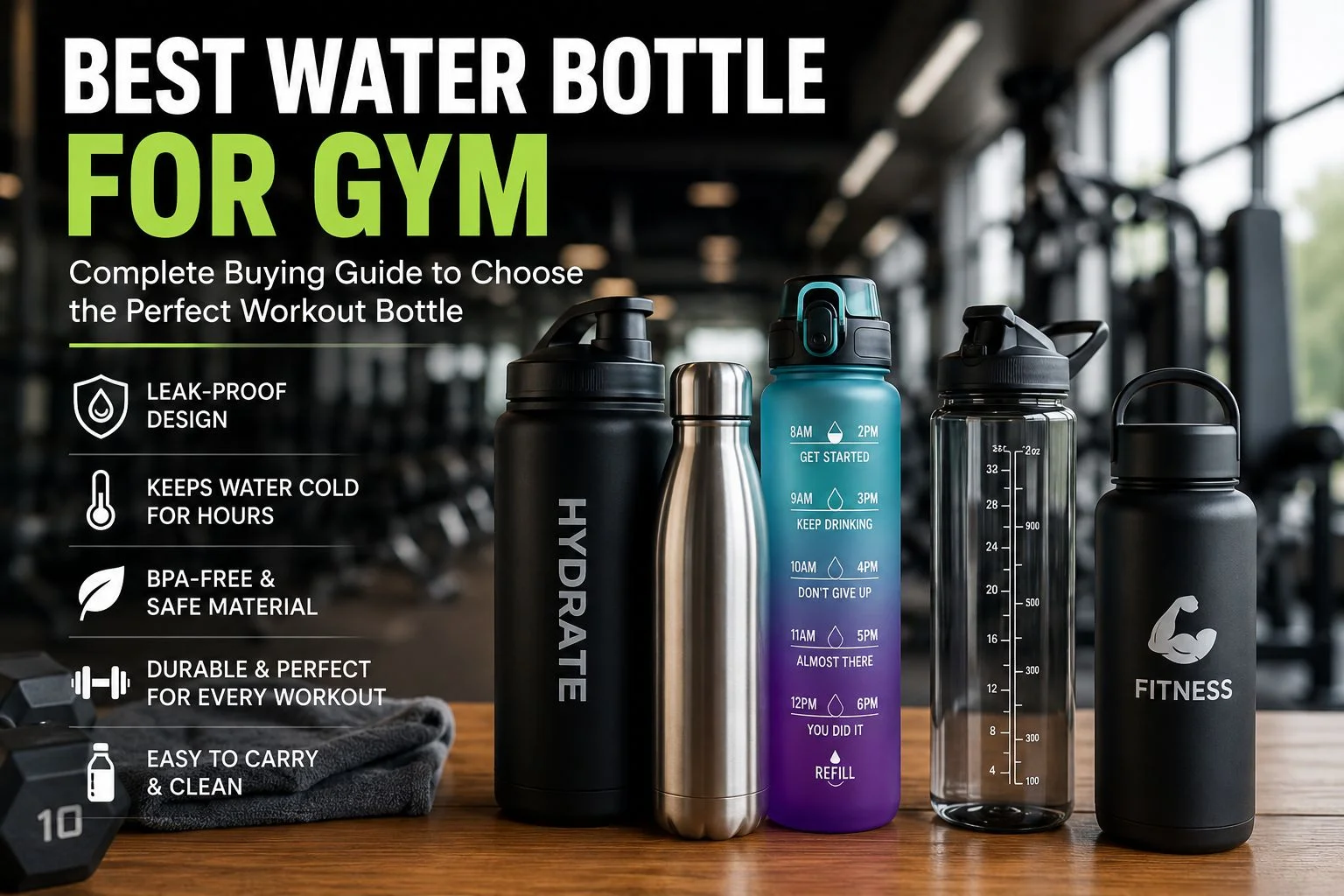
When people think about gym essentials, the first things that usually come to mind are workout shoes, comfortable clothing, resistance bands, or protein supplements. Yet one item quietly plays a much bigger role than most people realize—a reliable gym water bottle. Staying hydrated isn’t just about avoiding thirst; it’s directly connected to workout performance, endurance, muscle recovery, and overall health.
Whether you’re lifting heavy weights, running on a treadmill, attending a high-intensity HIIT session, or practicing yoga, your body continuously loses water through sweat. Even mild dehydration can reduce energy levels, affect concentration, and make workouts feel harder than they should. That’s why choosing the best water bottle for gym use is more important than simply picking the first bottle you see online.
Today’s market is filled with hundreds of options. Some promise superior insulation, while others focus on lightweight portability, motivational time markers, leak-proof lids, or eco-friendly materials. The challenge isn’t finding a water bottle—it’s finding one that genuinely matches your workout routine.
This guide explores everything you need to know before buying a gym water bottle, helping you spend wisely instead of replacing cheap bottles every few months.
Why Your Gym Water Bottle Matters More Than You Think
Hydration affects nearly every function inside the body. During exercise, water helps regulate body temperature, transport nutrients, lubricate joints, and support muscle function. If you’re exercising intensely for an hour or more, your hydration needs become even more important.
A quality gym bottle makes drinking water effortless. Instead of interrupting your workout with constant refills or worrying about leaks inside your gym bag, the right bottle keeps water accessible whenever you need it.
Many people underestimate how often they avoid drinking water simply because their bottle is inconvenient. A difficult cap, poor grip, unpleasant plastic smell, or constant leaking can discourage regular hydration.
The right bottle removes these small frustrations.
Features That Actually Matter
Marketing often highlights flashy features, but practical performance should always come first.
Material Quality
The material determines durability, taste, safety, and insulation.
| Material | Advantages | Best For |
|---|---|---|
| Stainless Steel | Durable, insulated, odor-resistant | Daily gym users |
| BPA-Free Plastic | Lightweight and affordable | Beginners |
| Tritan Plastic | Clear, durable, impact-resistant | Everyday workouts |
| Glass | Pure taste, eco-friendly | Home workouts |
| Aluminum | Lightweight | Casual fitness users |
Among these, stainless steel remains the most popular choice because it combines durability with excellent temperature control.
Capacity: Bigger Isn’t Always Better
Bottle size depends on your workout duration.
| Capacity | Suitable For |
|---|---|
| 500 ml | Short gym sessions |
| 750 ml | General workouts |
| 1 Liter | Strength training |
| 1.5–2 Liters | Long workouts and athletes |
Many beginners buy oversized bottles only to realize they become heavy and awkward during exercise.
For most gym-goers, a 750 ml or 1-liter bottle provides the ideal balance between portability and hydration.
Insulated vs Non-Insulated Bottles
Cold water can feel refreshing during intense workouts, especially in warm weather.
Double-wall vacuum insulated bottles can keep water cold for several hours without producing condensation.
Insulated Bottles
Advantages
- Keeps water cold for hours
- Durable construction
- No sweating on the exterior
- Better taste retention
Disadvantages
- Slightly heavier
- Higher price
Non-Insulated Bottles
Advantages
- Lightweight
- Affordable
- Easy to carry
Disadvantages
- Water warms quickly
- Less durable in many cases
If you train outdoors or spend long hours at the gym, insulation quickly becomes worth the investment.
Leak-Proof Design Saves More Than Your Gym Bag
A leaking bottle doesn’t just waste water—it can damage expensive headphones, smartphones, workout gloves, towels, or even your laptop if you’re heading straight from work.
Look for features like:
- Secure locking lids
- Silicone sealing rings
- One-click locking mechanisms
- Tested leak-proof construction
Always check customer reviews specifically mentioning leak resistance rather than relying solely on manufacturer claims.
Easy Cleaning Is Often Overlooked
A water bottle should be cleaned after every workout.
Bottles with narrow openings often develop unpleasant odors because cleaning brushes can’t reach every corner.
Wide-mouth bottles offer several advantages:
- Easier cleaning
- Faster drying
- Ice cube compatibility
- Better visibility during washing
Some premium bottles are dishwasher-safe, making maintenance even simpler.
Grip and Comfort Matter During Exercise
During intense workouts, sweaty hands make slippery bottles frustrating.
Look for bottles featuring:
- Powder-coated finish
- Textured grip
- Ergonomic design
- Carry handle
- Finger loop
These small improvements make hydration quicker without interrupting your workout rhythm.
Flip Lid, Straw, or Screw Cap?
The lid style changes the user experience more than many buyers expect.
Screw Cap
Ideal for:
- Weight training
- Hiking
- Travel
Pros:
- Maximum leak protection
- Simple design
- Easy maintenance
Cons:
- Requires two hands
Flip Top Lid
Ideal for:
- Cardio sessions
- Running
- CrossFit
Pros:
- One-handed operation
- Fast drinking
- Convenient during workouts
Cons:
- Hinges may wear over time
Straw Lid
Ideal for:
- Cycling
- Functional fitness
- Long workouts
Pros:
- Quick hydration
- Less interruption
- Comfortable drinking
Cons:
- Requires regular cleaning
Choosing the right lid depends on how you train rather than which option looks more attractive.
Should You Buy a Smart Water Bottle?
Technology has entered the hydration market with bottles that track water intake, glow to remind you to drink, and sync with fitness apps.
While these features sound appealing, they’re not essential for most gym users.
Unless you consistently struggle to stay hydrated or enjoy tracking health metrics, a well-built traditional bottle often provides better long-term value.
Stainless Steel vs BPA-Free Plastic: Which Is Better?
This debate appears frequently among fitness enthusiasts.
| Feature | Stainless Steel | BPA-Free Plastic |
|---|---|---|
| Durability | Excellent | Good |
| Weight | Moderate | Very Light |
| Insulation | Excellent | Limited |
| Taste Preservation | Excellent | Good |
| Price | Higher | Budget-Friendly |
| Lifespan | Long | Moderate |
If your budget allows, stainless steel generally delivers better long-term satisfaction. However, BPA-free plastic remains an excellent choice for beginners who prioritize lightweight convenience.
Common Mistakes Buyers Make
Many shoppers focus only on appearance or price while ignoring practical usability.
Some of the most common mistakes include:
- Buying oversized bottles that become uncomfortable to carry.
- Choosing attractive designs with poor leak protection.
- Ignoring cleaning convenience.
- Purchasing extremely cheap bottles with questionable material quality.
- Forgetting compatibility with car cup holders or gym equipment holders.
A thoughtful purchase saves money in the long run because a quality bottle can last for years with proper care.
Hydration Habits That Improve Workout Performance
Owning a great bottle only helps if you actually use it consistently.
A simple hydration routine can make a noticeable difference:
- Drink water before leaving for the gym instead of arriving dehydrated.
- Take small sips throughout your workout rather than drinking large amounts at once.
- Refill your bottle immediately after training to encourage hydration during recovery.
- Clean and dry the bottle daily to prevent odor and bacteria buildup.
Developing these habits often has a greater impact on performance than purchasing expensive fitness accessories.
Choosing the Right Water Bottle Based on Your Workout Style
Not every gym routine demands the same kind of water bottle. Someone who spends an hour lifting weights has different hydration needs than someone training for a marathon or attending back-to-back fitness classes. Matching your bottle to your workout style ensures you stay comfortable and hydrated without carrying unnecessary weight.
| Workout Type | Recommended Bottle | Why It Works |
|---|---|---|
| Weight Training | 750 ml–1 L Stainless Steel | Durable, keeps water cold, easy to carry between sets |
| Cardio | Flip-top BPA-Free Bottle | Quick one-handed drinking during short breaks |
| CrossFit | Leak-proof Straw Bottle | Fast hydration without interrupting workouts |
| Running | Lightweight Tritan Bottle | Easy to hold and lightweight |
| Yoga | Compact 500–750 ml Bottle | Portable and convenient |
| Outdoor Training | Double-Wall Insulated Bottle | Keeps water cold for hours in hot weather |
Choosing a bottle that complements your training routine is often more valuable than purchasing the most expensive model available.
Features Worth Paying Extra For
While it’s easy to get attracted to premium-looking bottles, only a handful of features truly improve your experience.
Vacuum Insulation
If you enjoy cold water throughout your workout, vacuum insulation is worth every rupee. High-quality insulated bottles can keep beverages cold for 12–24 hours and hot for several hours as well.
Wide Mouth Opening
A wide-mouth bottle is easier to clean, refill, and use with ice cubes. It also dries faster, reducing the chance of odor buildup.
Powder-Coated Exterior
This provides a secure grip even with sweaty hands and minimizes scratches from daily use.
Carry Handle
Whether you’re walking into the gym, commuting to work, or traveling, a built-in handle makes carrying your bottle much easier.
BPA-Free Certification
For plastic bottles, always confirm they are BPA-free. This helps ensure safer daily use and better long-term durability.
Mistakes to Avoid When Buying a Gym Water Bottle
Many buyers regret their purchase because they focus on style instead of functionality.
Here are a few mistakes to avoid:
- Buying the cheapest bottle without checking material quality.
- Choosing oversized bottles that become difficult to carry.
- Ignoring leak-proof reviews.
- Purchasing bottles that are difficult to clean.
- Forgetting to check if the bottle fits standard cup holders.
- Selecting heavy bottles for running or cardio sessions.
- Choosing fancy designs with poor lid quality.
A quality water bottle should make hydration easier—not become another inconvenience.
How to Keep Your Water Bottle Clean
Even the best bottle can develop unpleasant odors if it’s not cleaned regularly.
Follow these simple maintenance tips:
- Wash the bottle after every workout.
- Use warm water with mild dish soap.
- Clean the lid separately, especially around silicone seals.
- Leave the bottle open until completely dry.
- Deep-clean it weekly using a mixture of baking soda and warm water or white vinegar.
Avoid storing leftover drinks like protein shakes or flavored beverages overnight, as they can promote bacterial growth and unpleasant smells.
Is an Expensive Water Bottle Really Worth It?
The answer depends on how often you work out.
If you visit the gym only once or twice a week, a quality BPA-free Tritan bottle can serve you well for years.
However, if you train daily, travel frequently, or spend long hours outdoors, investing in a premium stainless steel insulated bottle often pays off. Better insulation, stronger construction, and improved durability make it a cost-effective choice over time.
Instead of replacing a low-quality bottle every few months, one good bottle can last for several years with proper care.
Our Buying Recommendation
If you’re shopping for the best water bottle for gym, prioritize these features in order:
- Leak-proof construction
- BPA-free or food-grade stainless steel material
- Comfortable size (750 ml–1 L for most users)
- Easy-to-clean wide-mouth design
- Comfortable grip
- Reliable insulation (if desired)
- Trusted brand with positive customer reviews
Avoid paying extra for gimmicky features you’ll never use. Focus on durability, convenience, and everyday performance.
Conclusion
A gym water bottle may seem like a simple accessory, but it plays a vital role in supporting your fitness journey. Proper hydration improves endurance, aids muscle recovery, enhances concentration, and helps regulate body temperature during workouts. Choosing the right bottle isn’t about buying the most expensive option—it’s about selecting one that suits your routine, is comfortable to use, and encourages you to drink water consistently.
Whether you prefer a lightweight BPA-free plastic bottle for quick gym sessions or a premium insulated stainless steel bottle for extended workouts, investing in quality pays off. A durable, leak-proof, and easy-to-clean bottle can serve you reliably for years while making hydration effortless.
Final Thoughts
The best gym water bottle is the one you’ll actually enjoy using every day. Look beyond trendy colors and marketing claims. Prioritize comfort, durability, leak protection, and ease of cleaning. Small details like a secure lid, wide opening, and comfortable grip can make a significant difference during daily workouts.
At DiscountWalaBazar, we recommend comparing features, reading verified customer reviews, and selecting a bottle that matches your fitness lifestyle rather than simply following trends. A thoughtful purchase today can support healthier hydration habits for years to come.
Frequently Asked Questions (FAQs)
1. Which material is best for a gym water bottle?
Food-grade stainless steel is generally considered the best option due to its durability, insulation, and ability to preserve taste. BPA-free Tritan plastic is also an excellent lightweight alternative.
2. What size water bottle is ideal for the gym?
For most people, a 750 ml to 1-liter bottle provides enough water for a standard workout without becoming too heavy.
3. Are insulated water bottles worth buying?
Yes. If you enjoy cold water during workouts or exercise outdoors, insulated bottles keep beverages cold for several hours and prevent condensation.
4. How often should I clean my gym bottle?
Ideally, after every workout. Regular cleaning helps prevent bacteria, mold, and unpleasant odors.
5. Is BPA-free plastic safe?
Yes. Reputable BPA-free bottles are designed for regular drinking water use and are considered much safer than older plastic materials containing BPA.
6. Can I store protein shakes in my water bottle?
Yes, but clean the bottle immediately afterward. Leaving protein shakes inside for extended periods can cause odor and bacterial buildup.
7. Do expensive bottles last longer?
Generally, yes. Premium bottles often use better materials, stronger seals, and higher-quality insulation, making them more durable over time.
8. Which lid type is best for gym workouts?
Flip-top or straw lids are convenient for cardio and high-intensity workouts, while screw-cap lids offer maximum leak protection for everyday use.


Leave a Reply